Common Website Mistakes That Cost Leads
Many service businesses do not have a traffic problem. They have a website problem. A site can look modern, load your services and still fail to turn visitors into enquiries. The real issue is usually a mix of unclear messaging, weak user journeys, poor SEO structure and disconnected follow-up systems.
In this guide, we break down the most common website mistakes that cost leads and explain how to fix them with better UX, SEO, conversion strategy, CRM and automation.
In this guide, you will learn
Learn why design alone is not enough if the user journey is unclear.
Understand the layout, content and CTA issues that create friction.
See why ranking is only valuable when the page matches search intent.
Connect your website with CRM, automation and follow-up processes.
1. Your Website Looks Good, But It Does Not Guide Visitors
A visually polished website can still fail if visitors do not know what to do next. This is one of the most common website mistakes that cost leads for service businesses. The design might look clean, but the page may not clearly guide users from interest to action.
A conversion-focused website should answer three questions quickly: what you do, who you help and what the visitor should do next. If users have to work too hard to understand your offer, they will usually leave before enquiring.
A website should not behave like a digital brochure. It should work like a guided sales journey that helps visitors make a confident decision.
2. Your Message Is Too Generic
Generic website copy is one of the fastest ways to lose attention. Phrases like “we provide quality service” or “we are passionate about what we do” may sound professional, but they do not explain why a customer should choose your business.
Strong website messaging should be specific. It should speak directly to your ideal customer’s problem, desired outcome and decision-making process.
Instead of generic copy, use clear value
- Explain the problem your customer is trying to solve.
- Show the result your service helps them achieve.
- Use industry-specific language your audience understands.
- Support your message with proof, examples, FAQs and case studies.
For example, a service business should not only say “professional website design”. A stronger message would be: “Websites designed to help service businesses attract, qualify and convert better leads.”
3. Your Calls to Action Are Weak or Hidden
A call to action is not just a button. It is the next step in the customer journey. If your CTAs are hidden, vague or only placed at the bottom of the page, you are making it harder for visitors to enquire.
Strong CTAs should be visible, specific and connected to the visitor’s intent. For service businesses, simple CTA options often work best because they reduce friction.
Use action-focused text: “Book a Consultation”, “Get a Website Review” or “Start Your Project”.
Repeat CTAs naturally: place them after key sections, not only at the top or bottom.
Support the button with microcopy: explain what happens after the visitor clicks.
4. Your Website Is Not Built Around Search Intent
SEO is not only about adding keywords. A website needs to match what people are actually looking for. If someone searches for “website design for small business”, they probably want examples, pricing direction, process, trust signals and a clear way to enquire.
If your page only talks about your business without answering the visitor’s questions, it may struggle to rank and convert. Google’s own SEO guidance recommends using the words people would search for in important places such as titles, headings, alt text and link text.
Common search intent mistakes
- Targeting broad keywords without answering specific questions.
- Creating service pages with thin or vague content.
- Using headings that sound creative but do not explain the topic.
- Not linking related services, blogs, case studies or resources together.
5. Your Pages Load Too Slowly
A slow website creates friction before the visitor even reads your content. For service businesses, this can directly impact leads because users often compare multiple providers quickly. If your website feels heavy, delayed or unstable on mobile, potential customers may leave.
Common speed issues include oversized images, too many scripts, unoptimised videos, heavy plugins and poor mobile performance. A modern website should feel fast, clean and easy to use, especially on mobile.
Optimise images, review plugin usage, test mobile performance and avoid adding unnecessary animations that slow down the page without improving conversion.
6. Your Forms Ask for Too Much Too Soon
Long forms can reduce enquiries if the visitor does not yet trust your business. Asking for too much information too early can make the process feel difficult, especially for mobile users.
The best form depends on the service, but most lead-generation websites should start with the minimum information needed to begin a conversation. You can collect more details later through automation, email follow-up or a discovery call.
A better lead form usually includes
- Name
- Phone number
- Service interest
- Short message or project details
7. Your Website Is Not Connected to a CRM
Getting a lead is only the beginning. If enquiries arrive by email and are handled manually, leads can be missed, delayed or forgotten. This is where many businesses lose opportunities without realising it.
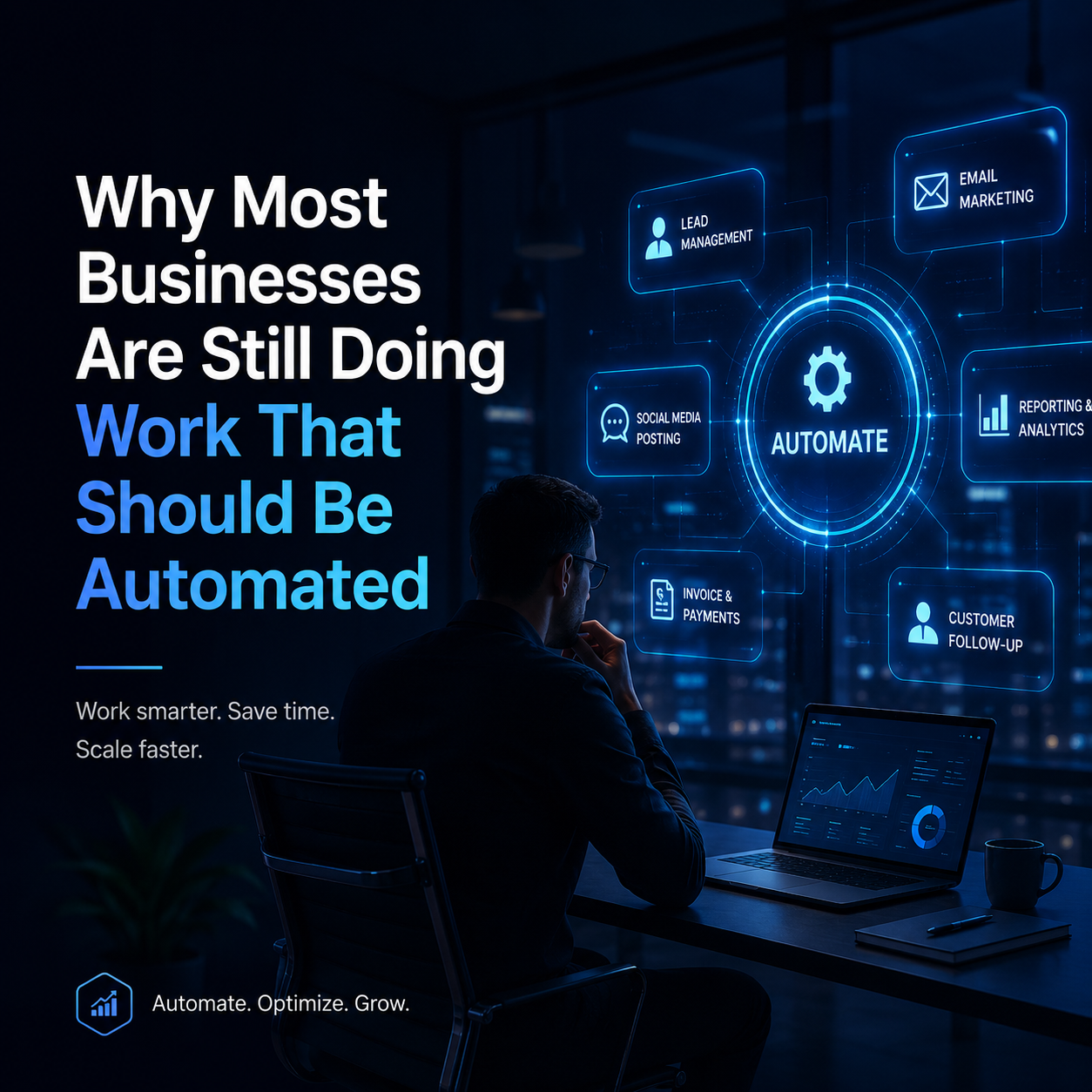
A website connected to a CRM can automatically organise enquiries, tag lead sources, notify the right person and create follow-up tasks. This turns your website from a static page into a proper business system.
Website form submitted: the lead is captured instantly.
CRM record created: the lead is organised with service interest and source.
Team notified: the right person can follow up quickly.
Automation triggered: confirmation emails and next-step messages are sent automatically.
8. You Are Not Tracking What Matters
Website traffic is useful, but it does not tell the full story. A business needs to know which pages, campaigns and CTAs are generating real enquiries.
If you only look at page views, you may not know whether your website is actually helping the business grow. Better tracking helps you understand what users do before they enquire and where they drop off.
Useful website metrics to track
- Form submissions
- CTA clicks
- Phone clicks
- Landing page conversion rates
- Traffic source by lead quality
- Popular service pages and blog posts
9. You Have No Follow-Up System
Many leads are not ready to buy immediately. Some visitors are comparing options, waiting for approval, researching prices or planning for later. If your website does not have a follow-up system, those leads can go cold.
Email automation, CRM tasks, remarketing audiences and helpful content can keep your business visible after the first website visit. This is especially important for service businesses with longer decision-making cycles.
The best websites connect content, forms, CRM and follow-up so the business can nurture leads after the first visit.
10. How to Fix These Website Mistakes
Fixing a low-converting website does not always mean starting again from zero. In many cases, the biggest improvements come from clarifying the message, improving the page structure, strengthening CTAs and connecting the website to better tracking and automation.
A practical improvement plan
- Review your key pages: homepage, service pages, landing pages and high-traffic blogs.
- Clarify your offer: make sure visitors understand what you do within seconds.
- Improve your CTAs: make the next step obvious and easy.
- Match content to intent: answer the questions people have before enquiring.
- Optimise mobile UX: reduce friction, improve speed and simplify forms.
- Connect your CRM: make sure every lead is captured and followed up.
- Measure conversions: track the actions that matter, not just traffic.
Conclusion: A Website Should Do More Than Look Professional
A professional website should not only look good. It should help your business attract the right visitors, answer their questions, build trust and make it easy to take action.
The most common website mistakes that cost leads usually come from a disconnected approach: design without strategy, SEO without conversion, forms without follow-up and content without clear intent.
When your website, SEO, CRM and automation work together, your website becomes more than an online presence. It becomes a lead-generation system for your business.
3D Marketing Web helps service businesses build websites, SEO strategies, CRM systems and automation workflows designed to generate better leads and support business growth.
Related Articles
Continue learning how to improve your website, SEO and digital systems for better lead generation.
How to Increase Leads From Your Website
Learn practical ways to turn your website into a stronger source of qualified enquiries.
Read article → Website DesignBuilding Websites That Generate Leads
See how conversion-focused design helps service businesses attract and convert better customers.
Read article → SEO StrategySEO for Websites That Convert
Understand how SEO and UX work together to bring traffic that can become real business opportunities.
Read article →Turn your website into a lead-generation system
If your website is getting visitors but not enough enquiries, the problem may be your strategy, structure, CTAs, SEO or follow-up system. 3D Marketing Web can help you redesign the journey and connect your website with the tools your business needs to convert better leads.
Tell us about your website and what you want to improve.